Upsc insights
Welcome to my UPSC learning space — where I share clear, concise, and thoughtful blogs on Polity, History, Geography, and Economics. Learn, revise, and stay inspired for your civil services journey.
Welcome to my UPSC learning space — where I share clear, concise, and thoughtful blogs on Polity, History, Geography, and Economics. Learn, revise, and stay inspired for your civil services journey.
Welcome to my UPSC learning space — where I share clear, concise, and thoughtful blogs on Polity, History, Geography, and Economics. Learn, revise, and stay inspired for your civil services journey.
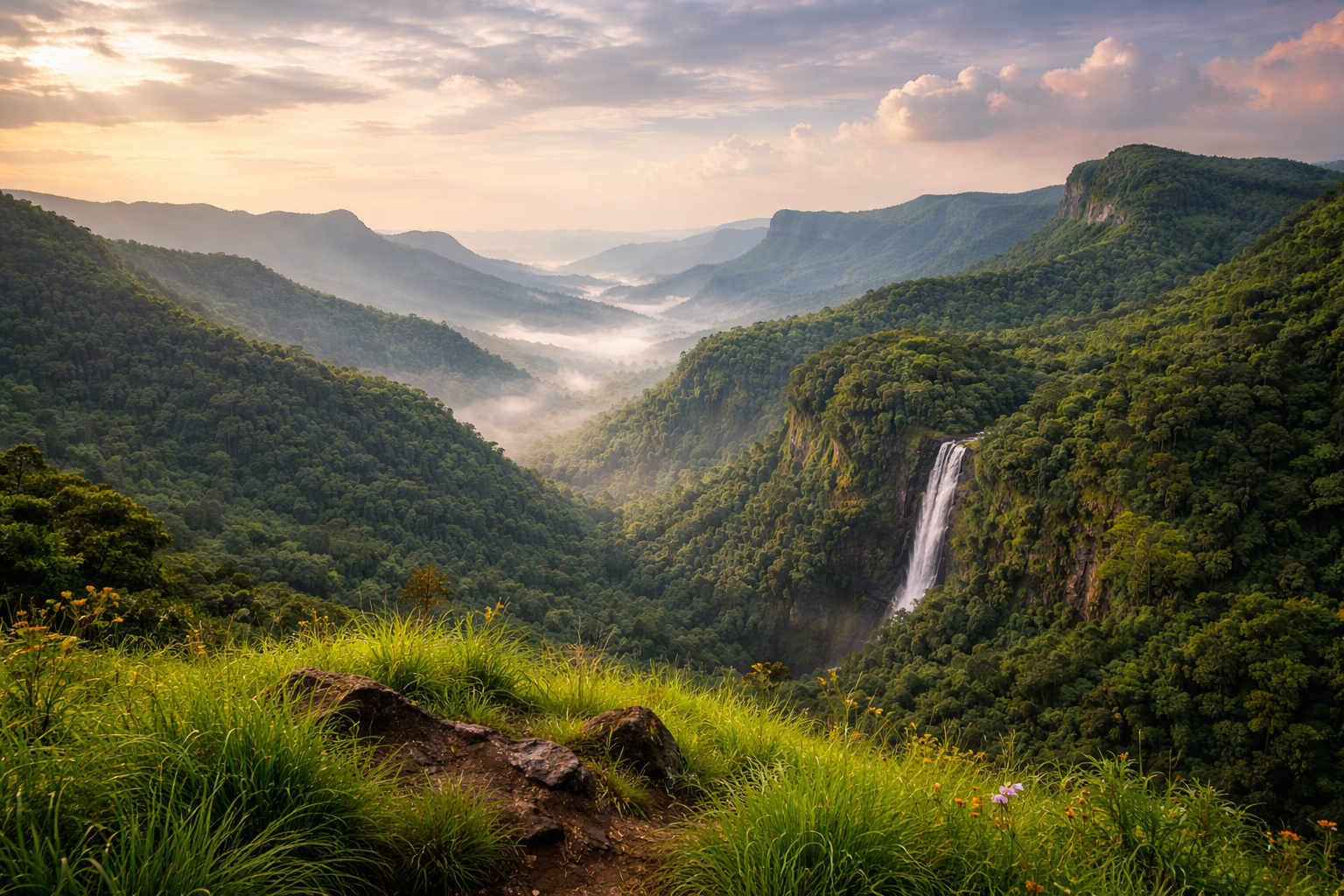
The formation of Western Ghats is closely linked to the geological history of the Indian plate. The Western Ghats are not fold mountains like the Himalayas. Instead, they are associated with faulting, volcanic activity, and continental breakup.
Understanding the formation of Western Ghats is important for UPSC, State PSC, and other competitive exams.
The Western Ghats run parallel to the western coast of India from Gujarat to Kerala. They extend for about 1,600 km and pass through states like Maharashtra, Karnataka, Tamil Nadu, Kerala, and Goa.
The Western Ghats are also a UNESCO World Heritage Site because of their rich biodiversity.
To understand the formation of Western Ghats, we must go back nearly 150 million years.
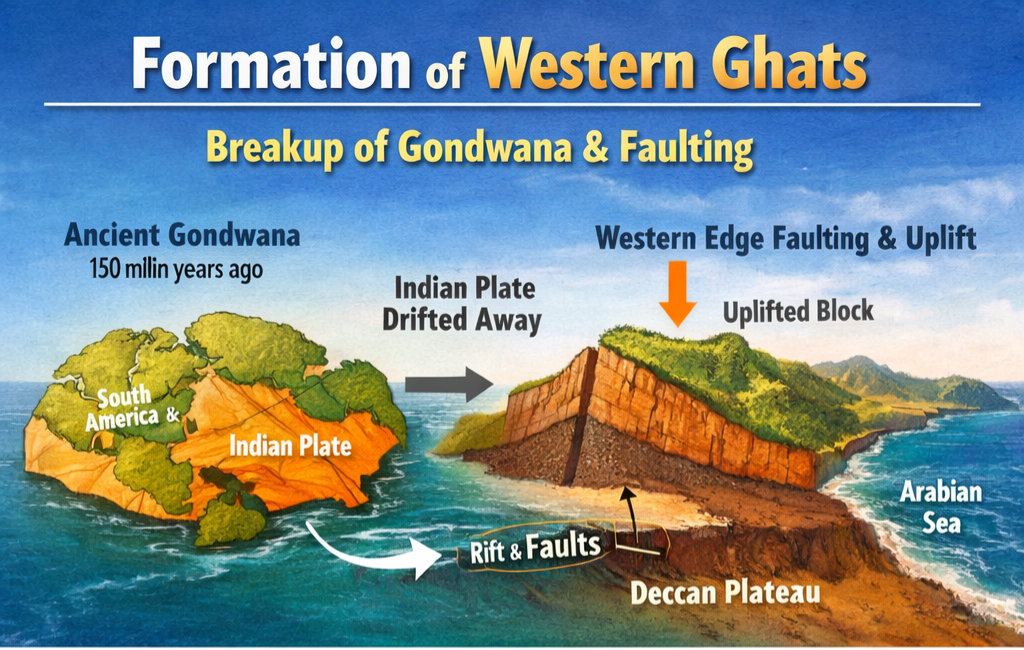
India was once part of a supercontinent called Gondwana. Around 150–130 million years ago, Gondwana began to break apart.
When the Indian plate separated from Madagascar, a major geological event occurred along the western margin of the Indian plateau.
This led to faulting and vertical movements of land blocks.
The formation of Western Ghats is linked to faulting along the western edge of the Deccan Plateau.
During the separation:
This created a high escarpment — which we now call the Western Ghats.
Because of this faulting process, the Western Ghats are often described as fault escarpments or block mountains.
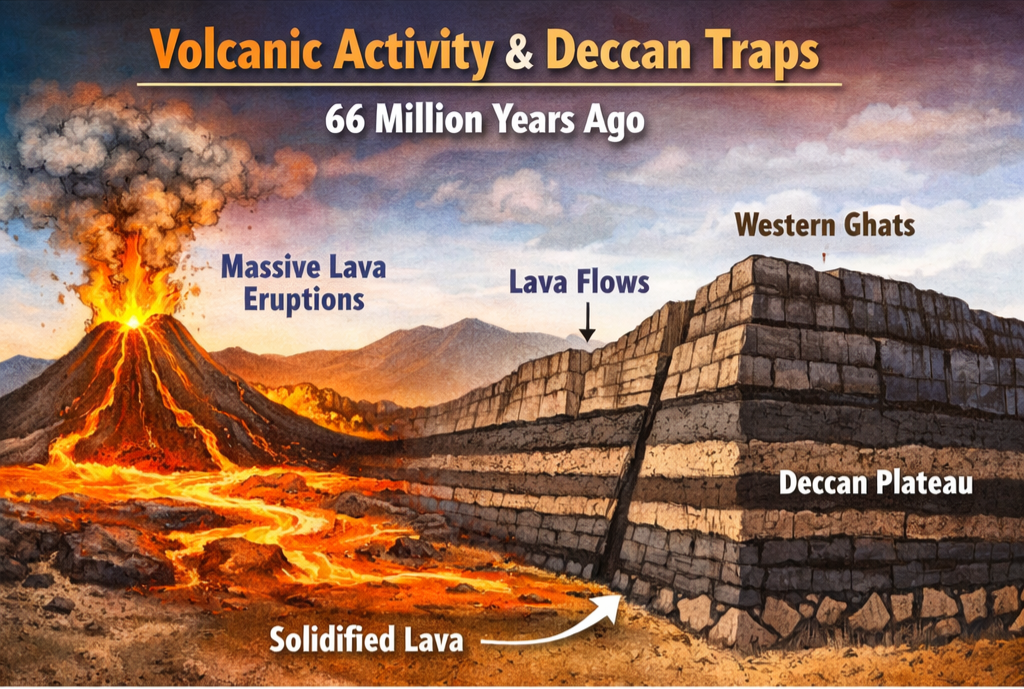
Another major factor in the formation of Western Ghats was volcanic activity.
Around 66 million years ago, massive volcanic eruptions formed the Deccan Traps. Lava spread over large parts of western and central India.
This lava solidified and formed basaltic rock layers. The Western Ghats are mainly composed of these basalt rocks.
Thus, the Western Ghats are connected with:
No.
The formation of Western Ghats did not happen due to folding of rock layers like the Himalayas.
Instead:
This is a very important exam distinction.
The formation of Western Ghats involved vertical movement of large crustal blocks.
When faulting occurred:
This uplifted block formed the Western Ghats.
Hence, they are described as block mountains.
However, some geographers also call them a fault escarpment rather than a typical block mountain.
The way the Western Ghats were formed affects:
The steep western slope forces monsoon winds to rise, causing heavy rainfall on the windward side.
This is why the western side receives heavy rainfall while the eastern side remains comparatively dry.
The formation of Western Ghats is the result of continental breakup, faulting, uplift, and volcanic activity. They are not fold mountains but are associated with block formation and fault escarpment processes.